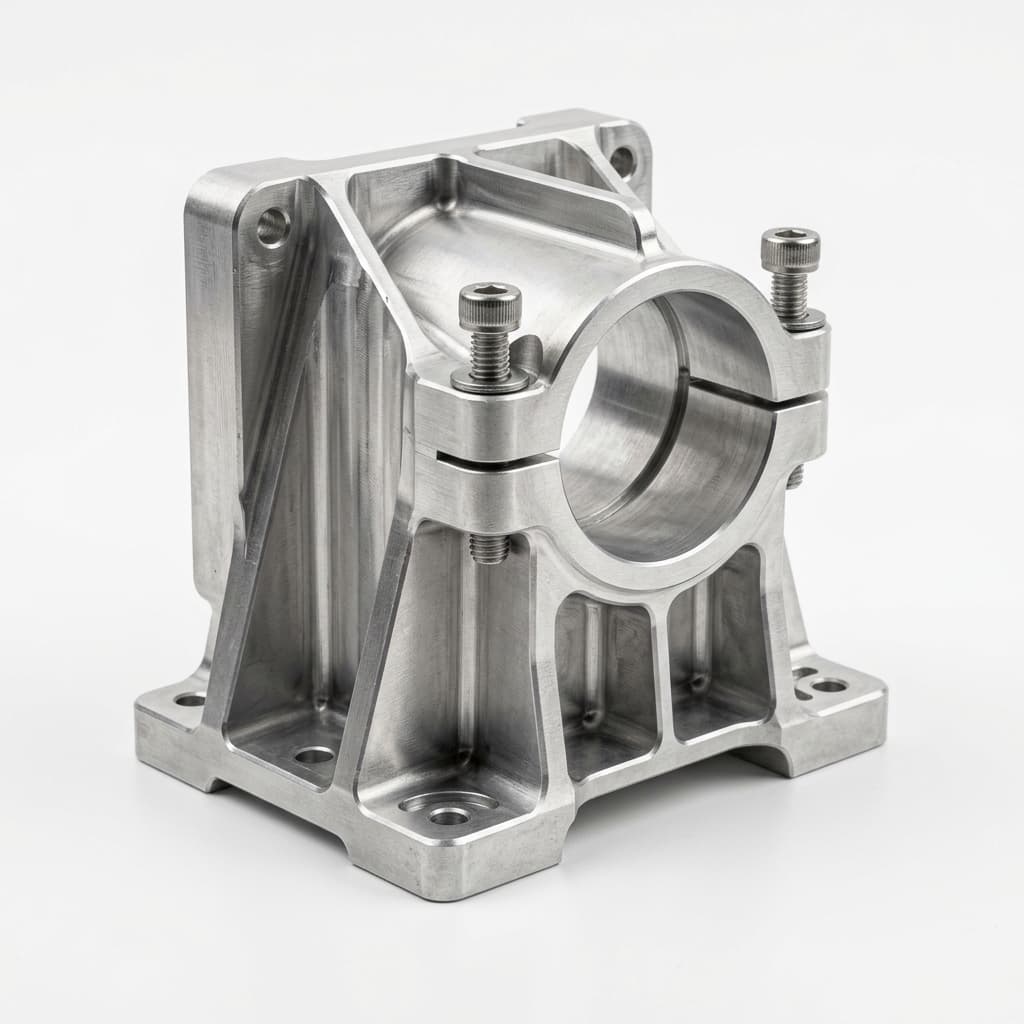
Turnkey Magnetic Assembly Validation Playbook for Robotics and Motor Programs
A practical validation framework for magnetic assemblies covering NdFeB grade-window lock, runout controls, balance-path acceptance, and shipment document packs.
Most schedule slips in magnetic programs do not come from CAD modeling. They come from unclear acceptance boundaries between magnet class, carrier machining, balancing target, and shipment documentation.
Positioning bridge: this is the magnetic-assembly entry point in Linkup's broader robotics motion hardware route. It connects magnet grade assumptions, machined carriers, coil interfaces, balance/runout checks, and document-pack planning without claiming upstream magnet production or motor-production ownership.
Related routes:
What buyers usually miss before PO release
In cross-border actuator and motor programs, prototype parts can look acceptable while pilot output still fails. The root cause is usually one of these:
- CTQ features are listed, but not linked to measurement methods;
- balancing is requested, but grade/speed/report format are not fixed;
- magnet assumptions are frozen in email threads, not in revision-controlled documents;
- shipment evidence requirements are added after parts are physically ready.
If you fix these four areas up front, supplier comparisons become technical and decision-ready.
Build a CTQ matrix before first sample cut
Do not approve a quote without a CTQ matrix. Keep it simple and auditable.
| CTQ group | Example requirement | Verification method | Sampling rule |
|---|---|---|---|
| Rotor geometry | Critical diameters / pocket location tolerance per drawing | CMM + gauge checks | 100% on first-article, AQL for repeat lots |
| Rotational quality | Runout/concentricity limits by interface | Dial/CMM in agreed setup | 100% on pilot, reduced by risk level after stability |
| Magnetic integration | Orientation and placement consistency | Fixture-based orientation check + visual criteria | 100% on pilot |
| Dynamic behavior | Residual unbalance target by speed | Dynamic balancing record | 100% for pilot and engineering change lots |
| Traceability | Revision/material/lot linkage | Digital traveler + report package | Every lot |
This table is the minimum control plane for buyer-side risk management.
Lock the magnet grade window and derating assumptions
Magnet class selection cannot be a generic "high-temp NdFeB" statement. Freeze:
- magnet class window (for example SH/UH range as required by your thermal model);
- operating temperature envelope and exposure profile;
- required magnetic orientation map and allowable orientation error;
- demagnetization margin expectation under your real duty cycle.
Use an assumption sheet like this:
| Item | Buyer input | Supplier confirmation | Release status |
|---|---|---|---|
| Temperature envelope | Min/nominal/max operating condition | Material suitability statement | Open / Closed |
| Magnet class range | Preferred + fallback class | Available lead-time by class | Open / Closed |
| Orientation map | Pole layout file + indexing rule | Assembly fixture compatibility | Open / Closed |
| Coating requirement | Corrosion environment note | Coating process and inspection route | Open / Closed |
When this sheet is missing, every drawing revision can silently reset your risk profile.
Make datum and runout strategy integration-driven
Most failures happen at interfaces, not at isolated dimensions. Define a datum chain that reflects assembly reality:
- Primary datum tied to bearing or shaft interface.
- Secondary datum tied to mounting reference.
- Tertiary datum tied to orientation/indexing feature.
Then map runout and concentricity controls by function:
- bearing-related surfaces: prioritize rotational stability;
- magnet pocket references: prioritize consistent magnetic center;
- mounting interfaces: prioritize repeatable final assembly behavior.
Add two governance rules:
- every CTQ tolerance must have a named measurement setup;
- every measurement setup must be reproducible across pilot and repeat lots.
Balance-path acceptance must include grade, speed, and evidence
Asking for "dynamic balancing" is not enough. Your RFQ should define:
- target quality grade path (for example G2.5 or G6.3 as program-appropriate);
- balancing speed or speed band relevant to service condition;
- correction-plane approach (single/dual plane as applicable);
- report format (before/after values, correction data, operator/machine trace).
Reference standards should be explicit in contract language (for example ISO 21940 family as applicable). If standards are not named, acceptance disputes are likely.
Pilot-to-repeat validation gates (practical version)
Use a four-gate model and do not skip gates under schedule pressure.
| Gate | Exit criteria | Evidence required | Owner |
|---|---|---|---|
| G1 Engineering freeze | Drawing + CTQ + test plan frozen | Revision release pack | Buyer engineering |
| G2 Process readiness | Fixture/inspection/work instructions ready | Process checklist | Supplier engineering |
| G3 Pilot acceptance | CTQ, runout, balance, traceability pass | Full pilot report | Buyer quality + supplier quality |
| G4 Shipment readiness | Documents complete for destination | CoC, material, inspection, compliance docs | Logistics/compliance owners |
If any gate is red, the lot is not release-ready.
Freeze shipment document pack before production launch
At minimum, define:
- CMM/inspection report structure;
- balancing report fields;
- material certificate and CoC requirements;
- lot traceability format;
- destination-specific document requirements and naming convention.
Buyers should also require one "document owner matrix" with contacts and backup contacts. This removes ambiguity during urgent shipment windows.
RFQ template block buyers can reuse
Use this structure in your inquiry:
Program: [project name]
Part family: [rotor/stator/assembly type]
Drawing revision: [rev]
Pilot qty / repeat qty: [x / y]

CTQ requirements:
- Interface runout and concentricity: [values + setup note]
- Balancing target: [grade + speed + report requirement]
- Magnet assumptions: [class window + orientation map + thermal envelope]

Validation and reporting:
- First-article report fields: [list]
- Sampling plan for repeat lots: [list]
- Nonconformance response window: [hours/days]

Shipment readiness:
- Required certificates/reports: [list]
- Destination-specific documentation: [list]
This level of definition improves quote quality and reduces NPI iteration loops.
Final decision rule
Do not evaluate suppliers only by unit price or nominal lead time. Evaluate by release confidence:
- clarity of CTQ evidence;
- maturity of balancing/reporting workflow;
- ability to sustain repeat-lot traceability;
- responsiveness to engineering changes.
That is what protects schedule and field reliability in magnetic assembly programs.
Author

Categories
More Posts
Megawatt CDU Manifold Machining: NPI Constraints and DFM Controls
A guide to machining and validating megawatt-class CDU manifolds with deep-port geometry, sealing interfaces, and staged approval gates.
Magnetic Assembly Prototype-to-Pilot Gate Review Template
Gate review model for moving magnetic assembly projects from prototype approval to stable pilot execution with measurable quality, process, and shipment controls.
Planetary Roller Screw Housing CNC Integration Guide for Robotics NPI
How to define support-housing geometry and inspection controls around roller-screw actuators without over-claiming core screw production scope.