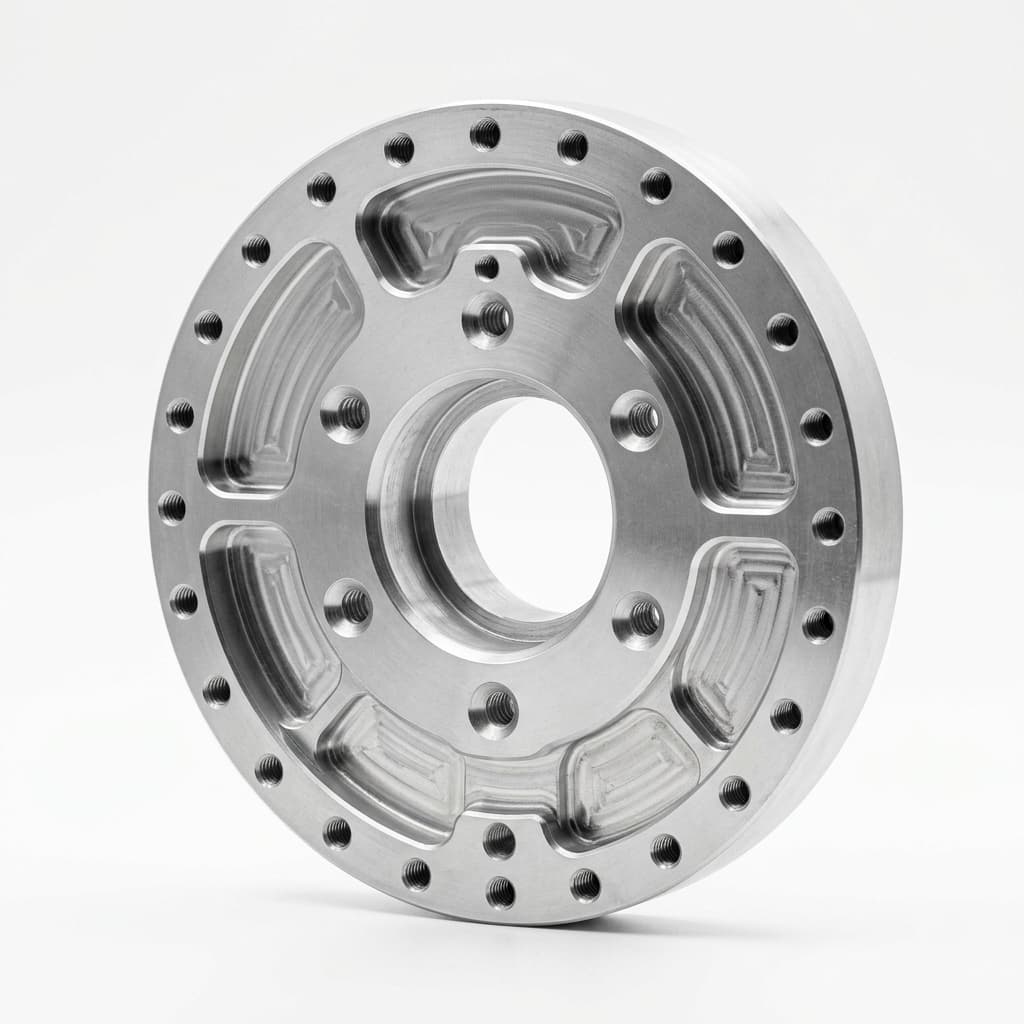
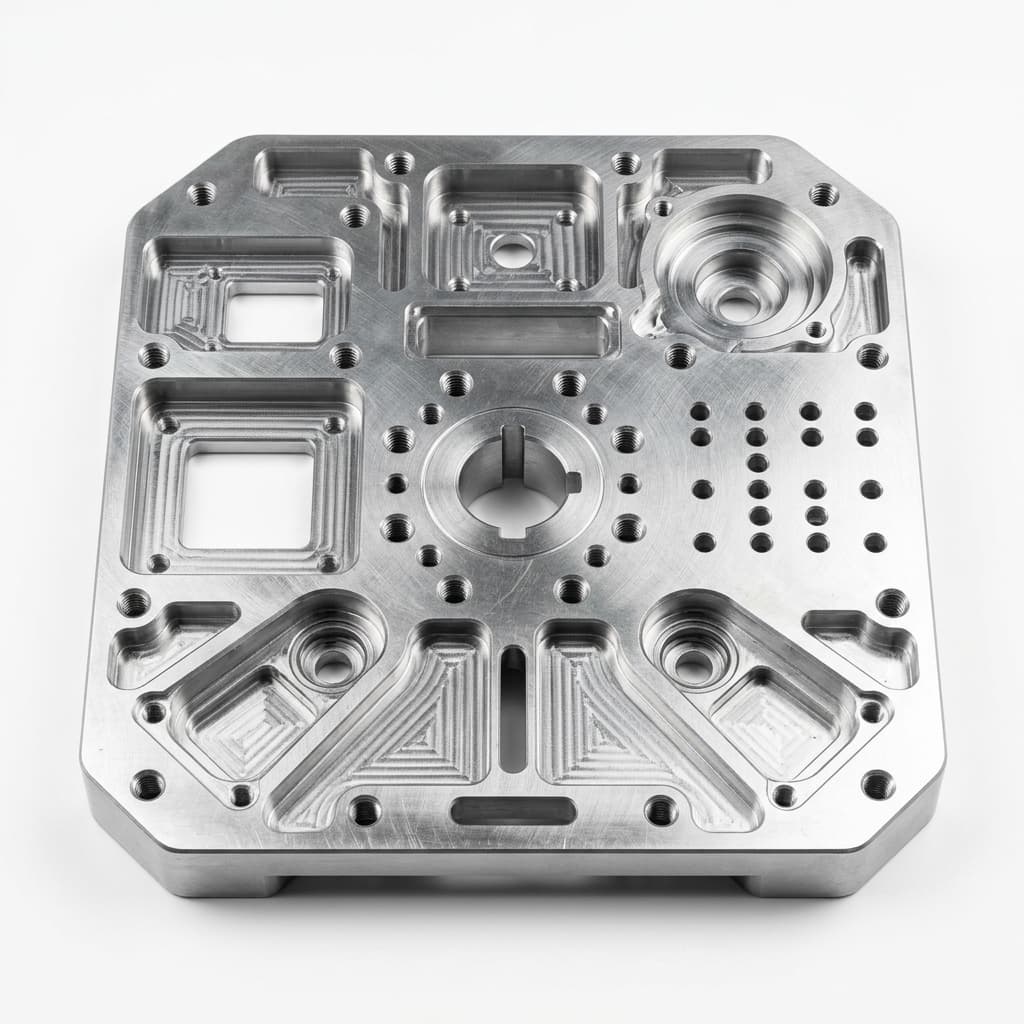
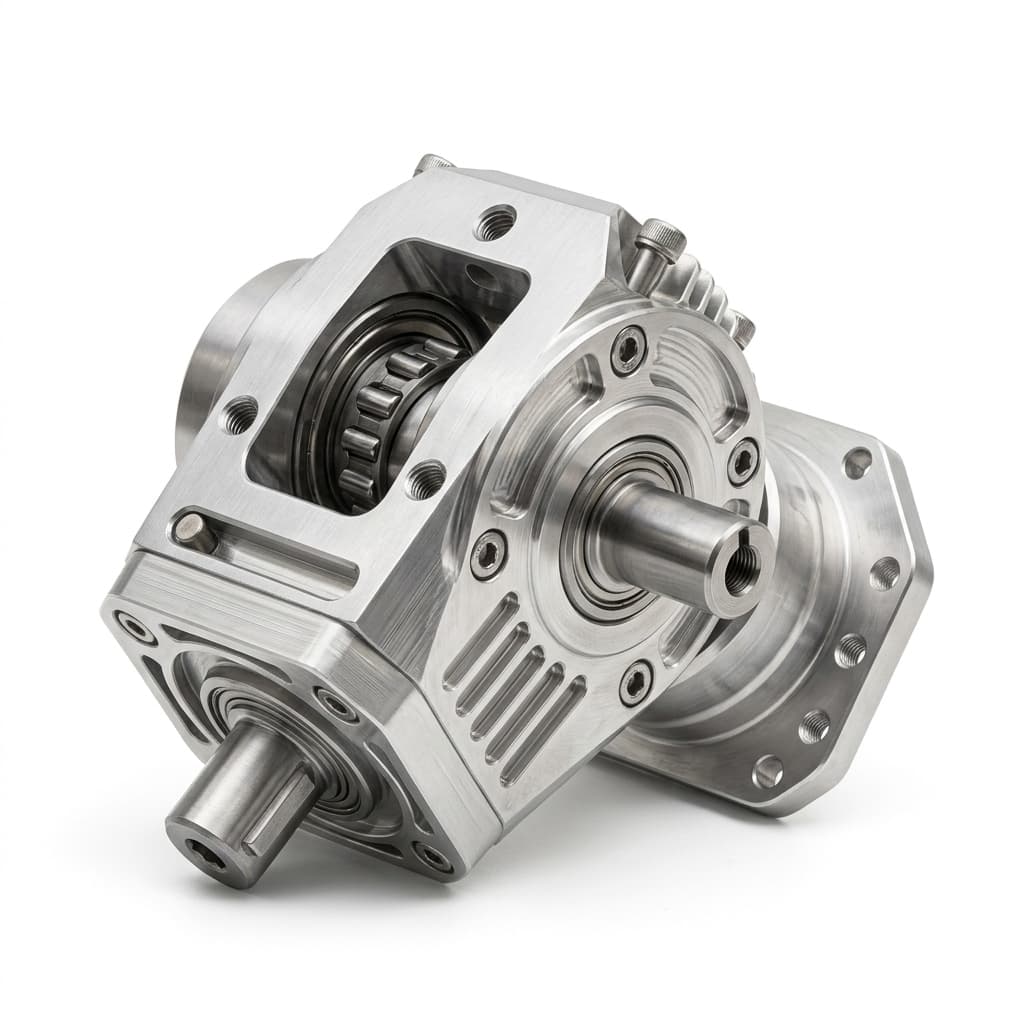
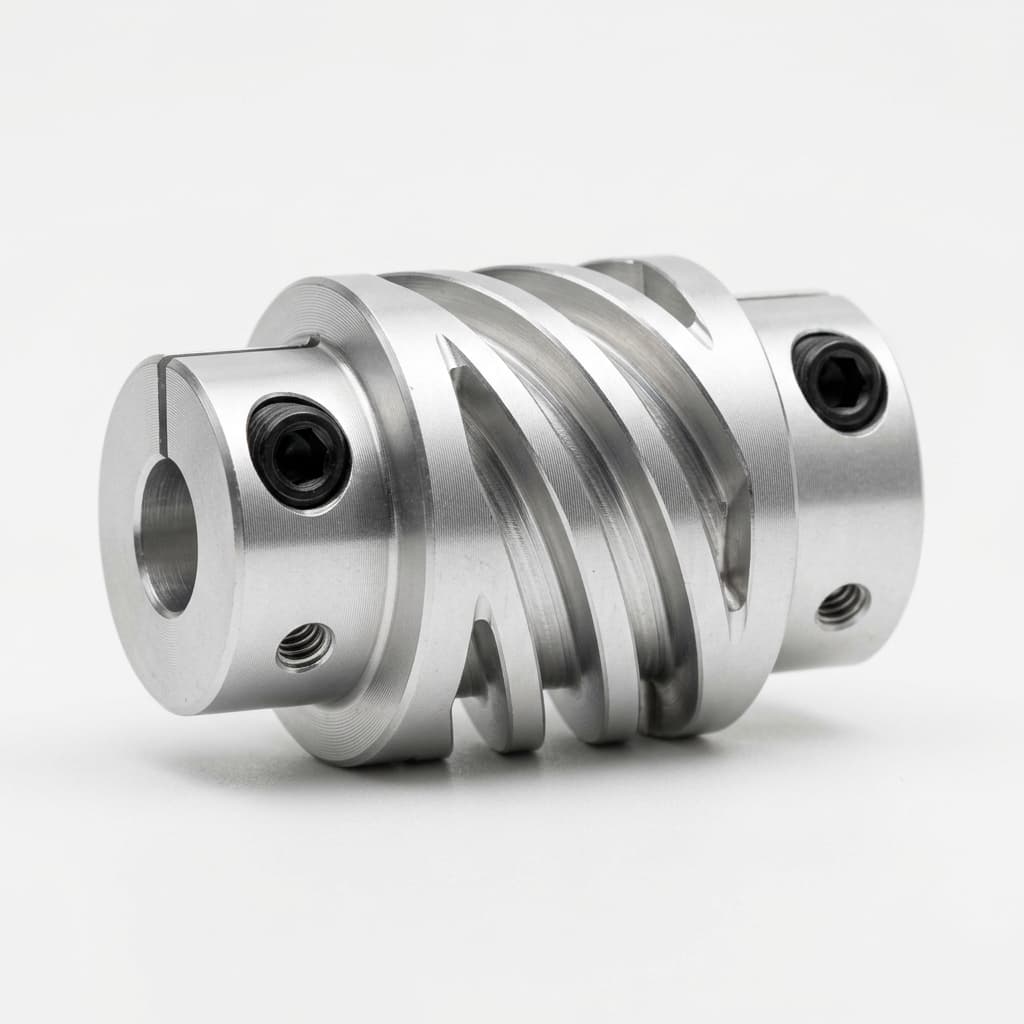
Custom CNC Parts Examples
Broad intake map
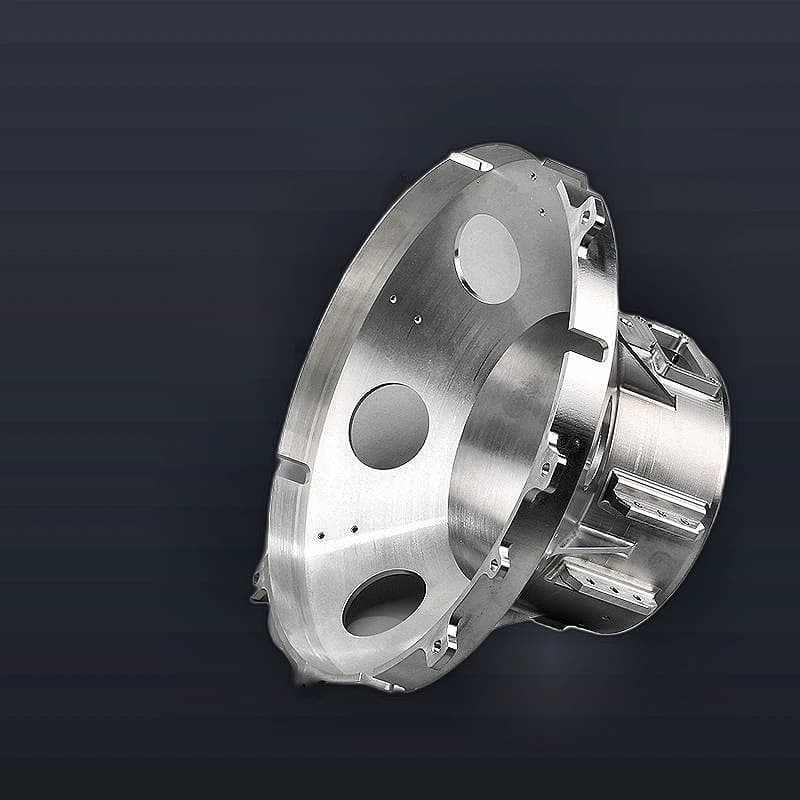
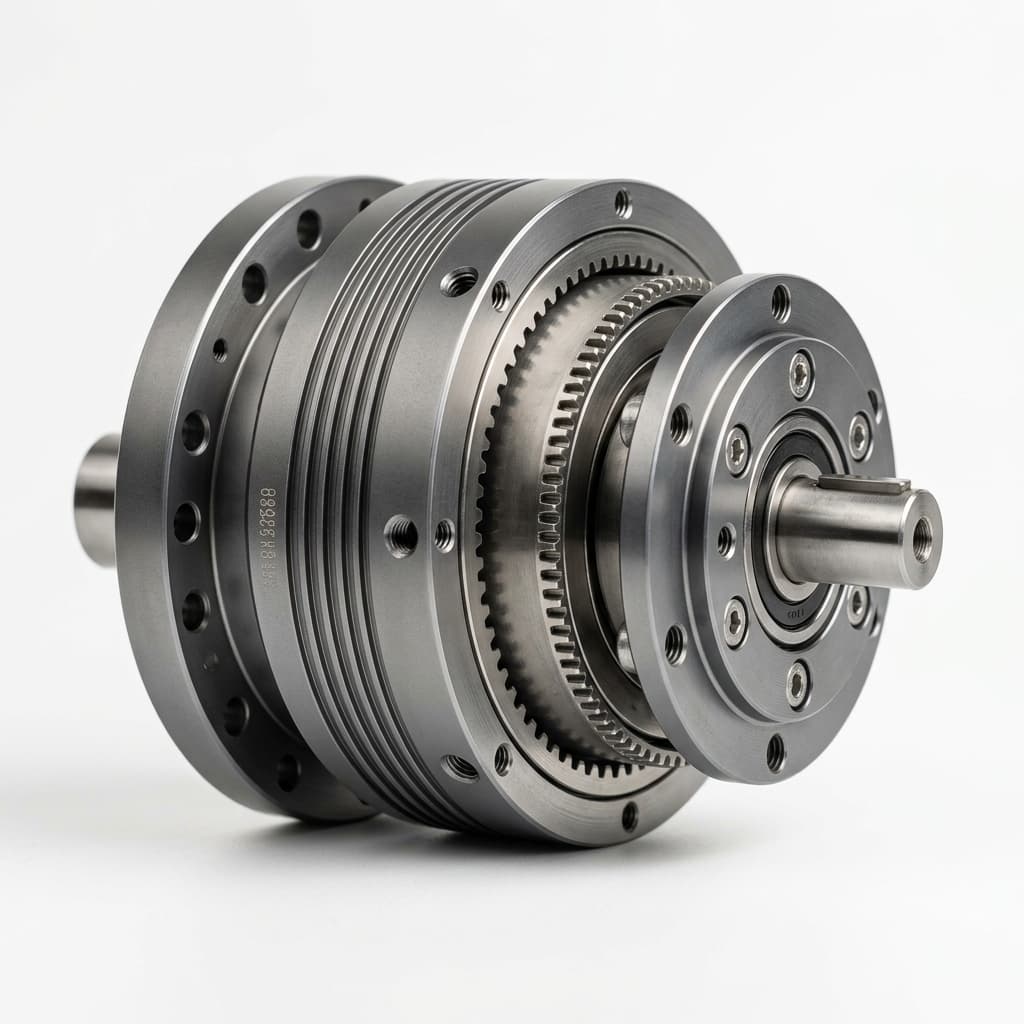
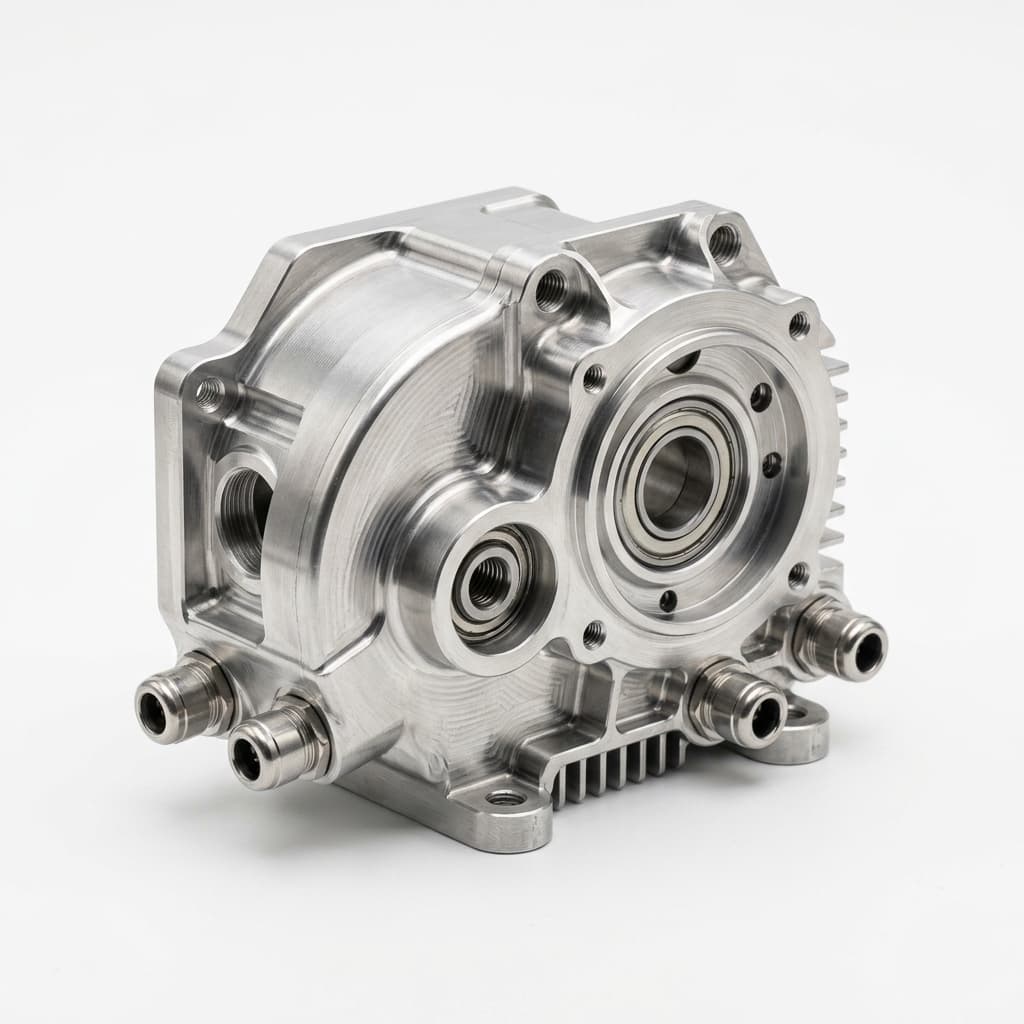
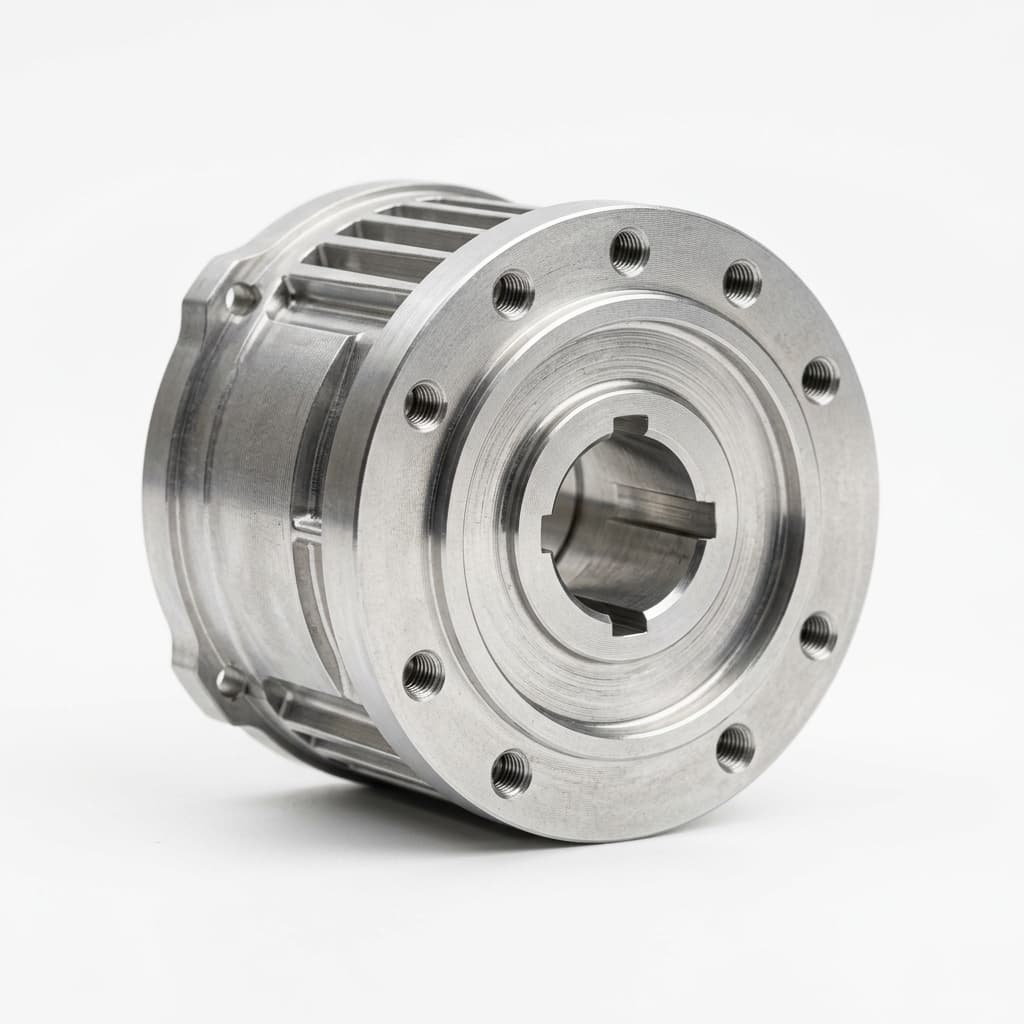
A CAD-first overview of representative custom CNC and precision interface part families for robotics motion hardware, magnetic assemblies, thermal systems, instrumentation, and advanced hardware teams.
This page keeps broad custom-part demand coherent by routing examples back to magnetic assemblies, motion hardware, complex CNC interfaces, and inspection-backed prototype work.
Engineers often ask for a catalog when they really need to know whether a custom manufacturer understands their kind of part before sharing CAD.
- Typical RFQ starts from customer STEP/PDF files rather than stock SKUs
- DFM notes flag tolerance stacks, datum strategy, material route, finish risk, and assembly conflicts before machining
- Inspection scope can include CMM, gauge checks, material certificates, finish notes, and first-article records when defined in RFQ
View part route detailsTurnkey Magnetic Assemblies
Magnetic assembly core
Integrated magnetic/electromechanical assembly programs combining magnets, coil interfaces, precision housings, alignment controls, balancing checks, and compliance-document workflow support through qualified partner execution.
This page is the main bridge from magnet/material demand into Linkup Precision: magnet assumptions plus CNC-machined carriers, coil interfaces, bonding, runout, balance, and release evidence.
Robotics and motor OEM teams face procurement friction from high-temperature magnet scarcity and export-control complexity.
- Material grade window and magnetization orientation are locked at RFQ with drawing revision control
- CMM checks on magnet-seat datums, air-gap-relevant interfaces, concentricity, and runout are defined before assembly release
- Dynamic balancing target path (for example ISO 21940 G2.5/G6.3 by application) is agreed before pilot sign-off
View part route detailsMotor-Adjacent CNC Parts
Motor-adjacent motion bridge
Component-level CNC manufacturing support for motor and actuator-adjacent parts where magnetic assumptions, bearing datums, encoder interfaces, shafts, rings, and housings must stay inspection-ready.
This route connects magnetic assembly assumptions to the machined carriers, housings, shafts, rings, and sensor interfaces that make motor and actuator hardware buildable.
Motor-adjacent parts are often quoted as generic CNC geometry even though rotor runout, stator alignment, encoder datum control, and coil-interface clearance drive assembly success.
- DFM notes connect motor-adjacent function to tolerances, datums, access, finish, and inspection method
- Runout, concentricity, bearing-seat, encoder-datum, and air-gap-adjacent features can be called out before sample release
- Inspection scope can include CMM, gauges, runout checks, material records, finish records, and shipment evidence when defined in RFQ
View part route detailsRotor & Stator Carrier Manufacturing
Magnetic-to-motion carrier bridge
Precision manufacturing support for rotor carriers, stator carriers, magnet-pocket rings, coil-side supports, and air-gap-adjacent interfaces where magnetic assumptions must stay tied to CNC datums and inspection evidence.
This page makes the magnetic-to-motion route concrete: magnet grade and orientation assumptions become carrier geometry, runout controls, bonding/retention decisions, and inspection checkpoints.
Rotor and stator carriers are often quoted as simple rings or housings, but carrier datum drift, magnet-pocket fit, coating build, air-gap clearance, and balance assumptions decide whether the motion stack can validate.
- DFM notes connect magnet grade/orientation, coating route, bonding or retention method, and carrier datum strategy before quote lock
- CTQ planning can include magnet-pocket fit, concentricity, runout, balance datum, coating allowance, and air-gap-adjacent surfaces
- Inspection scope can include CMM records, runout checks, gauge checks, material/finish records, and pre-ship photo evidence when defined in RFQ
View part route detailsEncoder Housing & Sensor Mount CNC
Feedback-interface motion hardware
Precision CNC support for encoder housings, sensor mounts, datum plates, cable-routing supports, and actuator-side measurement interfaces where alignment, sealing, and inspection access affect motion feedback reliability.
Encoder and sensor interfaces convert the magnetic-motion thread into measurable hardware: datums, mounting faces, sealing, cable clearance, and repeatable inspection points.
Encoder and sensor mounts are small compared with housings or flanges, but a missed datum, burr, sealing face, or cable-clearance conflict can make the motion stack hard to calibrate or impossible to assemble repeatedly.
- DFM notes can flag datum-chain ambiguity, thin-wall distortion, connector interference, sealing risk, thread risk, and deburr access before machining
- CTQs can include encoder datum face, bore/location position, flatness, perpendicularity, thread quality, cable clearance, and sealing surface finish
- Inspection scope can include CMM reports, gauge checks, thread checks, first-article notes, finish records, and pre-ship photo pack when defined in RFQ
View part route detailsBearing, Shaft & Flange Interface Parts
Motion-stack interface control
Precision CNC support for bearing seats, shafts, couplings, output flanges, adapter rings, retainers, and datum-controlled interface parts where coaxiality, fit, runout, and release evidence decide assembly success.
This route ties broad CNC demand back to motion hardware by focusing on the interfaces that carry load, define alignment, and give inspection teams measurable acceptance points.
Bearing seats, shafts, and flanges are easy to underestimate because they look familiar, but missed fit class, coaxial datum, shoulder geometry, thread quality, or flange-face runout can stop a pilot build.
- DFM notes can flag fit-class ambiguity, coaxial datum risk, flange runout, relief geometry, thread risk, surface finish, and inspection access before quote lock
- CTQs can include bearing bore tolerance, shaft fit, shoulder perpendicularity, flange flatness, runout, thread quality, dowel position, and sealing face finish
- Inspection scope can include CMM reports, runout checks, gauges, thread checks, material/finish records, and FAI-style evidence when defined in RFQ
View part route detailsRobot Joint Interface Components
Robot joint interface core
Precision manufacturing support for robot joint interface parts where reducer-side supports, bearing seats, output flanges, encoder datums, sealing faces, and fastener-critical features must work as one stack.
This page sits between actuator housing work and the broader motion hardware hub, focusing on CNC-machined interfaces that let joint stacks assemble, align, seal, and pass inspection.
Robot joint components can look like ordinary brackets or flanges until bearing seats, reducer datums, encoder interfaces, sealing faces, and fastener loads expose the real manufacturing risk.
- DFM review flags coaxiality, bearing fit, reducer-side datum, flange face, thread, and sealing risks before machining
- Inspection planning can include CMM checks, gauges, runout checks, flatness, perpendicularity, and documented feature acceptance
- Revision-controlled communication helps robotics teams iterate joint hardware without losing CTQ history
View part route detailsAI Liquid Cooling & Thermal CNC
Adjacent advanced-hardware route
Precision machining for AI rack liquid-cooling hardware where leakage tolerance and lead-time compression decide deployment speed.
Liquid-cooling hardware is not the brand center, but it fits the same complex-interface discipline: sealing CTQs, fine threads, material compatibility, inspection evidence, and prototype-to-pilot handoff.
AI racks are blocked by QDC/manifold shortages and long lead times from incumbent suppliers.
- Leak-path critical dimensions controlled with CTQ checkpoints
- Thread and seal-surface inspection records per batch
- DFM feedback focused on sealing reliability and machining feasibility
View part route detailsRobotic Actuator Housings
Robotics motion hardware core
Motor- and actuator-adjacent structural precision parts for humanoid and industrial robotics motion stacks where tolerance, coaxiality, and impact resistance control uptime.
This is the clearest CNC execution route for the magnetic-motion story: housings, carriers, flanges, brackets, and fit-critical interfaces around actuator stacks.
Robotics teams face shortages in high-precision mechanical nodes around actuator transmission and integration.
- Tolerance-focused machining plans for assembly-critical interfaces
- Shock-risk considerations in geometry and material recommendations
- Engineering review loops tailored to robotics NPI cadence
View part route detailsAerospace Titanium Machining
Adjacent high-performance hardware route
Machined-from-billet titanium parts for prototype and bridge production when casting lead times are too long for program milestones.
Titanium machining remains an adjacent precision-component offer for programs with the same CAD-first review, CTQ, inspection, and evidence requirements.
Aerospace and motorsport teams face long queues for specialty titanium casting and downstream processing.
- Machining strategy tuned for titanium heat and tool-wear behavior
- Inspection checkpoints around geometry stability and tolerance drift
- Program communication centered on lead-time risk mitigation
View part route detailsTwo-Phase D2C Cold Plate CNC
Thermal precision-interface route
CNC machining support for two-phase direct-to-chip cold plate hardware where leak-path control and micro-channel consistency drive deployment readiness.
This thermal route stays in the adjacent advanced-hardware lane: leak-path CTQs, channel geometry, sealing datums, inspection evidence, and prototype-to-pilot release planning.
AI thermal teams face rising heat flux while available two-phase-ready cold plate supply remains constrained.
- Helium leak test setup can be applied per customer-specified pressure differential and acceptance threshold
- CMM verification on channel depth, flatness, and sealing datums before release
- Thread gauges and surface-finish checks on leak-critical interfaces
View part route detailsZero-Leakage Blind-Mate QDC CNC
Thermal precision-interface route
Precision machining support for blind-mate QDC metal bodies where valve-seat geometry and sealing datums determine leak-risk outcomes.
QDC work fits the same complex-interface logic as motion hardware: tight seats, threads, coatings, sealing datums, test-bound acceptance, and documented inspection scope.
Teams replacing long-lead incumbent QDC supply need machinable blind-mate hardware routes with inspection discipline.
- Helium leak test method can be defined in RFQ acceptance plan
- Go/no-go thread gauge and sealing-face inspection records per batch
- CMM report on key concentricity and seat-position tolerances
View part route detailsMegawatt CDU Manifold Machining
Thermal precision-interface route
CNC machining support for high-flow CDU manifold blocks where pressure integrity and distribution geometry affect deployment-critical uptime.
Large manifold machining remains an adjacent proof route for complex CNC interfaces, with port-location CTQs, pressure-test assumptions, and release records defining the fit.
Megawatt-class liquid cooling rollouts require manifold capacity and precision faster than many standard supply channels can provide.
- Pressure-hold or leak test method can be configured per customer validation standard
- CMM checkpoints on branch spacing, port location, and sealing datums
- Visual and dimensional verification records released with each lot
View part route detailsPlanetary Roller Screw Housing CNC
Actuator-adjacent motion hardware route
Precision machining for roller-screw-adjacent housings and support interfaces where coaxiality and bearing-fit governance drive actuator reliability.
This page keeps roller-screw demand inside Linkup scope by focusing on housings, flanges, bearing seats, and integration interfaces rather than the roller screw core itself.
Robotics programs can source roller screws slowly, but still fail on downstream housing precision and integration repeatability.
- CMM verification on coaxiality, bore alignment, and datum relationships
- Bore and thread gauge checks against drawing-defined fit classes
- First-article dimensional report prior to pilot lot release
View part route detailsHumanoid Linear Actuator Enclosure CNC
Robotics motion hardware route
CNC machining support for humanoid linear actuator enclosures where weight, stiffness, and fit consistency must be balanced under compressed NPI timelines.
This enclosure route ties humanoid actuator demand back to motor mounts, bearing pockets, cable passages, lightweight shells, and inspection-backed assembly interfaces.
Humanoid pilot programs are blocked by enclosure packaging complexity and tight tolerance demands across rapid design revisions.
- CMM inspection on bore concentricity, flange flatness, and datums
- Gauge checks for threaded and bearing-fit features
- First-article inspection records tied to revision-controlled drawings
View part route detailsMachined from Billet Titanium Alternative
Adjacent high-performance hardware route
Machining-first titanium route for urgent prototype and bridge builds when casting queues threaten aerospace and high-performance program milestones.
This route preserves titanium search intent while keeping the umbrella logic consistent: CAD-first feasibility, distortion planning, critical datums, documentation, and scoped handoff.
Teams waiting on specialty titanium casting routes need a schedule-aware machining alternative for geometry-compatible parts.
- Material verification by certificate review plus PMI path when required in RFQ
- CMM verification on geometry-critical datums and fit interfaces
- Surface and visual inspection plus optional NDT workflow coordination by project requirement
View part route detailsPowder Metallurgy Transition for Robotics Components
Advanced process transition route
Engineering transition route for robotics teams moving selected parts from CNC-heavy prototypes toward PM/MIM-ready production windows.
PM/MIM content is framed as route-screening for selected robotics component classes, with CNC retained for critical datums and qualified partner execution where needed.
Robotics programs hit cost and cycle-time limits when all actuator-adjacent metal parts stay on CNC routes into pilot and repeat-planning phases.
- Transition decisions documented by tolerance class, volume band, and acceptance gates
- CMM-datum governance retained on machining-critical interfaces before handoff
- Pilot-lot review includes route-risk register and fallback criteria
View part route detailsMicro-MIM Gears for Robotic Hands
Advanced process transition route
Feasibility and execution framework for micro-scale MIM gear classes used in dexterous robotic hand modules and compact actuator stacks.
Micro-MIM demand is connected to robotic hands and compact actuator stacks through feature screening, fallback machining, inspection gates, and pilot acceptance criteria.
Dexterous-hand programs require tiny, repeatable gear geometries that become expensive and slow when sustained only by micro-CNC routes.
- Feature-level suitability matrix includes minimum wall and key datum classes
- Pilot acceptance gates include gear-interface dimensional verification
- Route-selection records preserve fallback machining path for critical revisions
View part route detailsSoft Magnetic Composite Motor Core Route
Motor-adjacent materials route
Program-level route planning for SMC-oriented motor-core geometries in robotics drives where 3D flux paths and compact packaging are key.
SMC-oriented content bridges material and motor interest into Linkup through bounded route planning, machined interfaces, pilot validation, and partner-routed process scope.
Advanced robotics motor teams exploring SMC-like core structures lack clear manufacturability boundaries and execution pathways.
- Route decision table documents geometry-fit assumptions and exclusions
- Assembly-critical interfaces retain machining verification checkpoints
- Comparison blocks include condition-bound assumptions, not blanket superiority claims
View part route detailsTitanium MIM Components for Robotics
Lightweight robotics transition route
Decision framework for lightweight titanium MIM component programs in robotics, balancing mass targets, durability needs, and route feasibility constraints.
Titanium MIM is presented as a condition-bound transition path for robotics component classes, with critical interfaces, validation plans, and fallback routes defined before commitment.
Robotics teams need lighter metal components but often lack a bounded framework for deciding when titanium MIM transitions are viable.
- Transition matrix states weight target assumptions and feasibility limits
- Critical datums remain governed by machining verification where required
- Pilot acceptance criteria are defined before route lock-in
View part route details