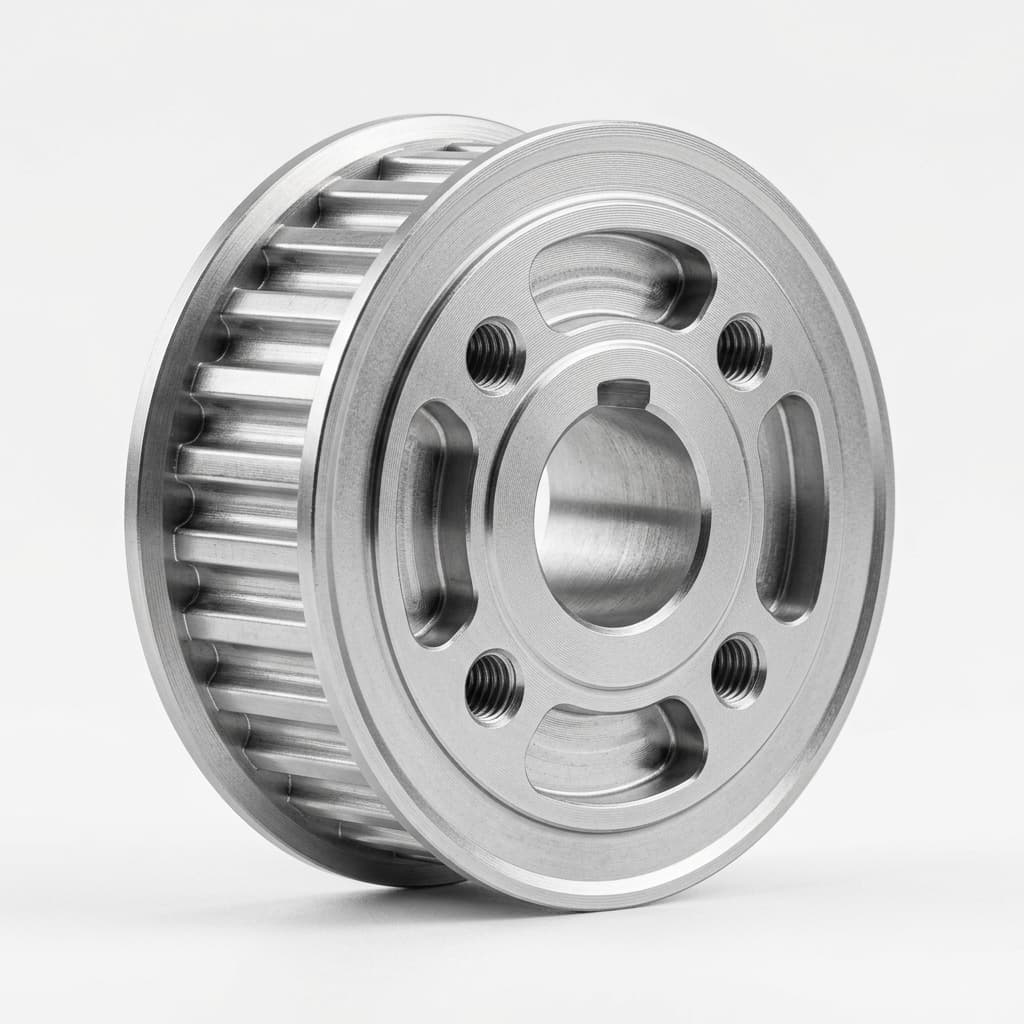
Rotor Magnet Bonding Process Window for Repeatable Prototype Builds
Framework to control adhesive bonding, curing, and runout during custom magnetic rotor prototyping so pilot builds stay repeatable across lots and operators.
Most magnetic rotor prototype failures are not caused by magnet grade. They are caused by unstable bonding execution.
When adhesive amount, curing conditions, and fixture references are loosely controlled, pilot lots pass once and fail on repeat.
Positioning bridge: rotor magnet bonding belongs to the magnetic-motion thread because the real risk sits at the interface between magnet placement, machined carrier geometry, runout, balancing evidence, and pilot repeatability. Linkup frames this as assembly and validation support, not motor-production ownership.
Related routes:
Why "one good sample" is not enough
Prototype success can hide process instability. A rotor that passes once may fail in pilot because bonding variables were not controlled as a system.
For buyers, the objective is not only "part passes drawing." The objective is repeatable process capability across lots, operators, and rework cases.
1. Build the process window from measured pockets, not nominal CAD
Start with real manufacturing data:
- measured pocket size distribution from first-article output;
- pocket surface condition and cleaning readiness;
- fixture contact behavior and positional repeatability.
Then define a process window with lower/target/upper boundaries for:
- adhesive dispense amount;
- placement timing and open-time limits;
- part seating force and alignment controls;
- allowed squeeze-out profile and cleanup boundary.
If this step is skipped, runout drift and balancing rework will rise in pilot phase.
2. Treat adhesive selection as a controlled engineering decision
Do not treat adhesive as a commodity line item. Freeze:
- adhesive grade and approved alternates;
- lot traceability requirements;
- storage and shelf-life controls;
- handling rules before dispense (temperature/humidity/conditioning as required by TDS).
Create an "adhesive change control rule": no lot substitution without documented impact review.
3. Define curing profile as a release parameter
Curing profile must be part of technical release, not tribal knowledge:
| Parameter group | What to define | Why it matters |
|---|---|---|
| Cure profile | Time/temperature path and tolerance band | Drives bond consistency |
| Fixturing hold | Minimum hold duration before movement | Controls positional drift |
| Transfer rule | Allowed queue time before next process | Prevents uncontrolled variation |
| Verification | How cure completion is confirmed | Protects downstream quality |
All values should follow adhesive supplier TDS and your program validation plan.
4. Insert runout checkpoints into the route card
Runout must be verified in stages to locate variation sources:
- Post-machining baseline: confirm starting geometry.
- Post-bonding interim check: detect placement-induced shift.
- Post-curing cleanup check: capture curing/cleanup effects.
- Pre-balancing release check: confirm readiness for dynamic test.
For each stage, define:
- fixture/setup reference;
- measurement method;
- acceptance threshold;
- disposition rule if out of limit.
Without staged checks, teams only discover issues at final balance, where correction cost is highest.
5. Add MSA and capability expectations for pilot
Pilot governance should include minimum metrology confidence:
- measurement method repeatability check for key CTQs;
- clear operator instructions for setup and zeroing;
- evidence that the method can discriminate near-threshold parts.
For capability management, classify CTQs by risk:
- high-risk CTQs: stricter sampling and containment;
- medium-risk CTQs: standard pilot controls;
- low-risk CTQs: reduced frequency after stability confirmation.
This keeps quality effort proportional to technical risk.
6. Define rework boundaries before production starts
Rework rules should be explicit and pre-approved:
| Scenario | Allowed action | Required re-inspection | Final disposition |
|---|---|---|---|
| Minor cosmetic squeeze-out issue | Controlled cleanup | Visual + dimensional confirmation | Accept if criteria pass |
| Runout near threshold after bonding | Recheck per staging plan | Full runout sequence | Conditional release or hold |
| Bond integrity concern | Rebond only if approved route exists | Full inspection + balance validation | Release only after full pass |
| Critical CTQ violation | No uncontrolled repair | NCR + engineering review | Scrap or formal deviation decision |
If this table does not exist, teams make inconsistent decisions under delivery pressure.
7. Link balancing acceptance to bonding process control
Balancing should not be treated as a separate department issue. It is an output of upstream bonding stability.
Require in pilot reports:
- balancing result records tied to lot/serial IDs;
- linkage to runout stage data;
- trend view across pilot batches (not single-point pass/fail only).
This helps buyers decide if the process is stabilizing or just statistically lucky.
8. Pilot-to-repeat release checklist
Before moving to repeat lots, confirm:
- Process window boundaries are documented and signed.
- Curing profile and hold/transfer rules are frozen.
- Stage-gate runout data shows stable behavior.
- Rework matrix is approved by engineering and quality.
- Pilot report pack includes traceable balance/runout evidence.
If any item is missing, keep the program in pilot mode.
RFQ block for bonding-centric projects
Program: [name]
Assembly type: [rotor variant]
Drawing revision: [rev]
Pilot qty / repeat qty: [x / y]

Bonding controls requested:
- Adhesive class and approved alternate rule
- Cure profile and hold-time definition
- Runout checkpoints by process stage
- Rework boundary matrix

Evidence required:
- Stage-wise runout records
- Balancing report linked to lot IDs
- Nonconformance and corrective-action summary
This level of RFQ precision improves supplier comparability and reduces late-stage surprises.
Author

Categories
More Posts
EU CBAM Data-Readiness for CNC Aluminum Components: A Procurement Checklist
Use this 2026 procurement checklist to source CNC aluminum components for EU CBAM readiness: emissions evidence, supplier questions, and RFQ controls.
Digital Product Passport (DPP) Data Readiness for CNC Machined Assemblies
A 2026 procurement guide to CNC machining supplier DPP readiness under EU ESPR, with data vectors, RFQ audit checks, source limits, and buyer actions.
2026-W21 Industrial Buyer Update: Tariff Coding, Magnetic Supply, and AI Liquid-Cooling Procurement Signals
Decision-focused update for U.S./EU/APAC buyers on tariff coding, magnetic supply continuity, and AI liquid-cooling CNC procurement risk in the last 30 days.